
A leaking dishwasher can turn a normal kitchen day into a mop-and-towel operation. While it might look like a disaster, most leaks come from a few common issues that you can troubleshoot yourself before calling in a repair professional. Let’s go step by step through what could be causing your leak and how to fix it.
1. Pinpointing the Leak Location
The first step in fixing a leak is figuring out where the water is coming from.
- Front of the dishwasher – Usually points to a door seal problem.
- Underneath the door – Could be a clogged filter, overfilled tub, or spray arm problem.
- Sides or bottom edges – May mean a loose hose, faulty pump, or tub crack.
- From the back – Often caused by drain or fill hose issues.
Dry the area, run a short cycle, and watch closely to see where water first appears.
2. Common Causes and How to Fix Them
A. Worn or Dirty Door Gasket
The gasket is the rubber seal that runs around the inside edge of the door. Over time, it can harden, crack, or get coated in food debris, allowing water to escape.
Fix:
- Inspect the gasket for cracks, splits, or flat spots.
- Clean it with warm, soapy water.
- If damaged, replace it with a model-specific gasket.
B. Faulty Water Inlet Valve
If the inlet valve sticks open, the dishwasher may overfill, causing water to spill out.
Fix:
- Turn off power and water supply.
- Inspect the valve for signs of mineral buildup or damage.
- Replace if it’s not shutting off properly.
C. Loose or Damaged Hoses
Fill hoses, drain hoses, and internal water lines can develop cracks or loosen at the clamps.
Fix:
- Check connections under the dishwasher and at the sink.
- Tighten clamps and replace hoses showing wear.
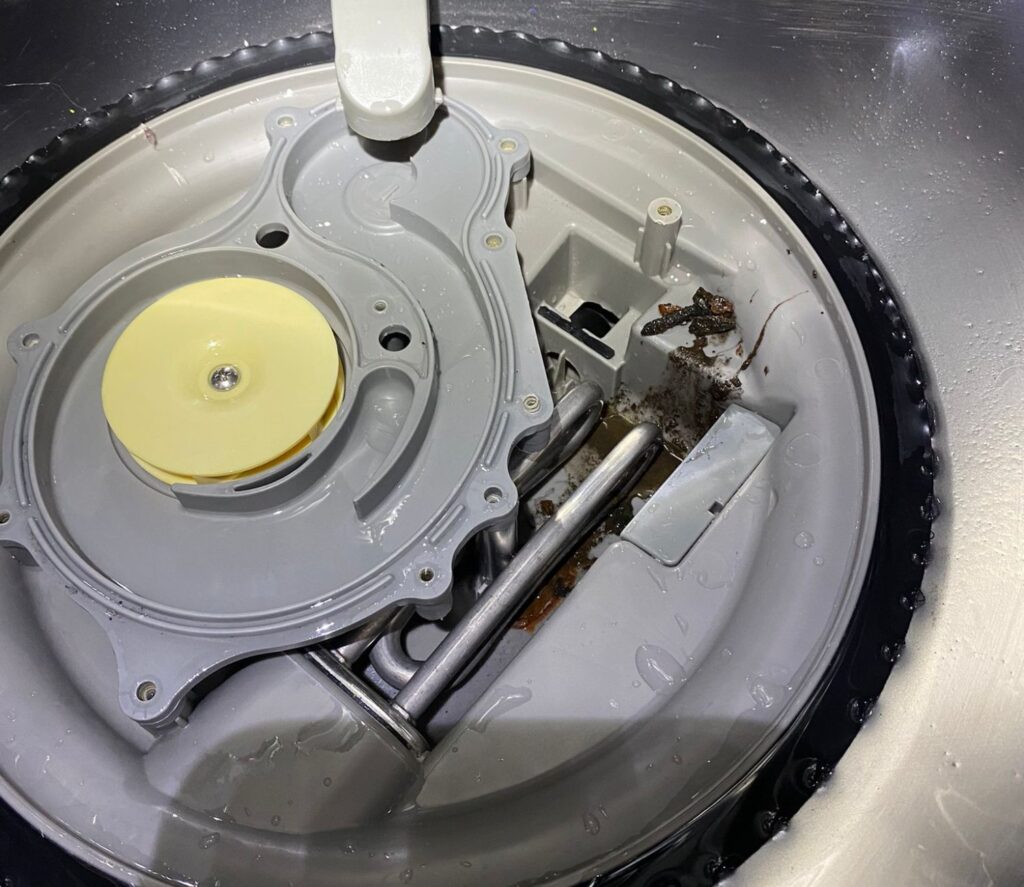
D. Leaking Drain Pump
The pump moves dirty water out of the tub. A worn seal or cracked housing can leak.
Fix:
- Inspect for moisture or water trails on or around the pump.
- Replace the pump if it’s leaking during operation.
E. Spray Arm Issues
If spray arms are cracked or clogged, they can shoot water toward the door seals instead of circulating it inside the tub.
Fix:
- Remove spray arms and check for cracks or blocked holes.
- Clean or replace if damaged.
F. Overloading or Incorrect Loading
Loading too many dishes or blocking the spray arms can cause water to deflect into the door seams.
Fix:
- Follow your dishwasher’s loading guide.
- Avoid blocking detergent dispensers or spray arm movement.
G. Unlevel Dishwasher
If the dishwasher tilts forward, water can pool and leak out the front.
Fix:
- Use a level to check the appliance.
- Adjust the leveling legs so the front is slightly higher than the back.
H. Cracked Tub
Rare but serious, a cracked interior tub will allow water to escape.
Fix:
- Small cracks can sometimes be sealed with waterproof epoxy as a temporary fix.
- Long term, replacing the tub or entire unit is usually necessary.
3. Preventing Future Leaks
- Clean the filter every month to prevent water backup.
- Rinse large food particles from dishes before loading.
- Inspect door gaskets twice a year for wear.
- Avoid using too much detergent, as excess suds can cause overflow.
- Check for and tighten loose hose clamps during seasonal cleaning.
4. When to Call a Professional
Call an appliance repair technician if:
- You find a cracked tub.
- The leak is coming from electrical components or deep inside the machine.
- You’ve tried the above fixes and the problem persists.
- Your dishwasher is under warranty and requires authorized service.
Quick Troubleshooting Table
| Leak Location | Common Cause | Solution |
|---|---|---|
| Front door area | Worn gasket | Clean or replace gasket |
| Under door | Overfill or spray arm misdirecting water | Adjust load, clean spray arms |
| Sides or bottom edges | Loose hose or pump seal | Tighten or replace part |
| Back of dishwasher | Drain or fill hose leak | Replace hose or tighten connection |
A leaking dishwasher doesn’t always mean it’s time for a replacement. Many leaks are caused by small, inexpensive parts or simple maintenance issues. By identifying the source and following a methodical checklist, you can stop the drip and get back to a clean, dry kitchen floor.